
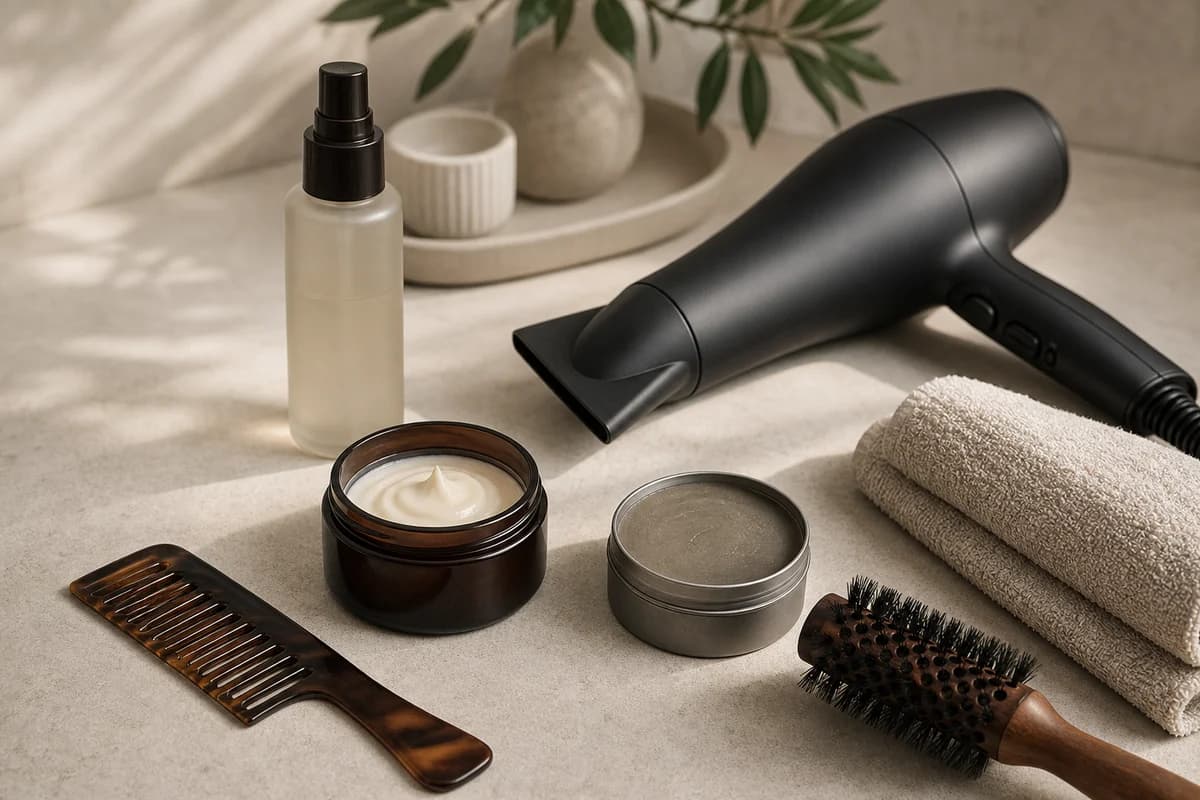
The biggest men’s hair mistake is trying to fix the cut with product. Product helps, but shape comes first.
If the sides are too wide, the top is too heavy, the fringe falls wrong, or the neckline looks neglected, no pomade will fully solve it.
Decide what the hair should do for your face
Hair can:
- add height
- reduce width
- soften sharpness
- make the jaw look cleaner
- balance a forehead
- make photos look more polished
That is why copying a haircut from someone with different hair density, face shape, and hairline can disappoint.
Start with your hair type
Fine hair usually needs lighter product and less weight. Thick hair may need control and structure. Curly or textured hair often needs moisture, definition, and less aggressive brushing.
AAD hair guidance notes that different hair types have different needs and that wet hair can break more easily, though tightly curled or textured hair may be better brushed when wet to reduce breakage.
Control the sides
Many men look less polished when the sides grow wide before the top looks long. This can make the face look rounder or less structured in photos.
Ask your barber:
- how often should I clean up the sides?
- where should weight sit?
- should the top move up, back, or forward?
- what should I avoid with my hairline?
Choose finish carefully
Finish changes the mood:
- matte: natural, modern, less shiny
- low shine: polished but not slick
- high shine: sharper, dressier, more controlled
- textured: casual and fuller
- smooth: cleaner and more formal
Most everyday styles look better with less product than you think.
Protect from damage
AAD recommends limiting heat styling, using low or medium heat settings, and using products that protect hair from heat. Letting hair air-dry when possible can also reduce damage.
For daily styling:
- towel blot instead of rough rubbing
- use low heat
- stop before hair feels cooked
- avoid heavy long-lasting hold every day
- wash product buildup out properly
The useful takeaway
Men’s hair styling works best in this order:
- haircut shape
- face framing
- hair type
- drying method
- small amount of product
If you want to know what your hair is doing for your face in photos, create your report. The report includes grooming and style priorities from one selfie.