
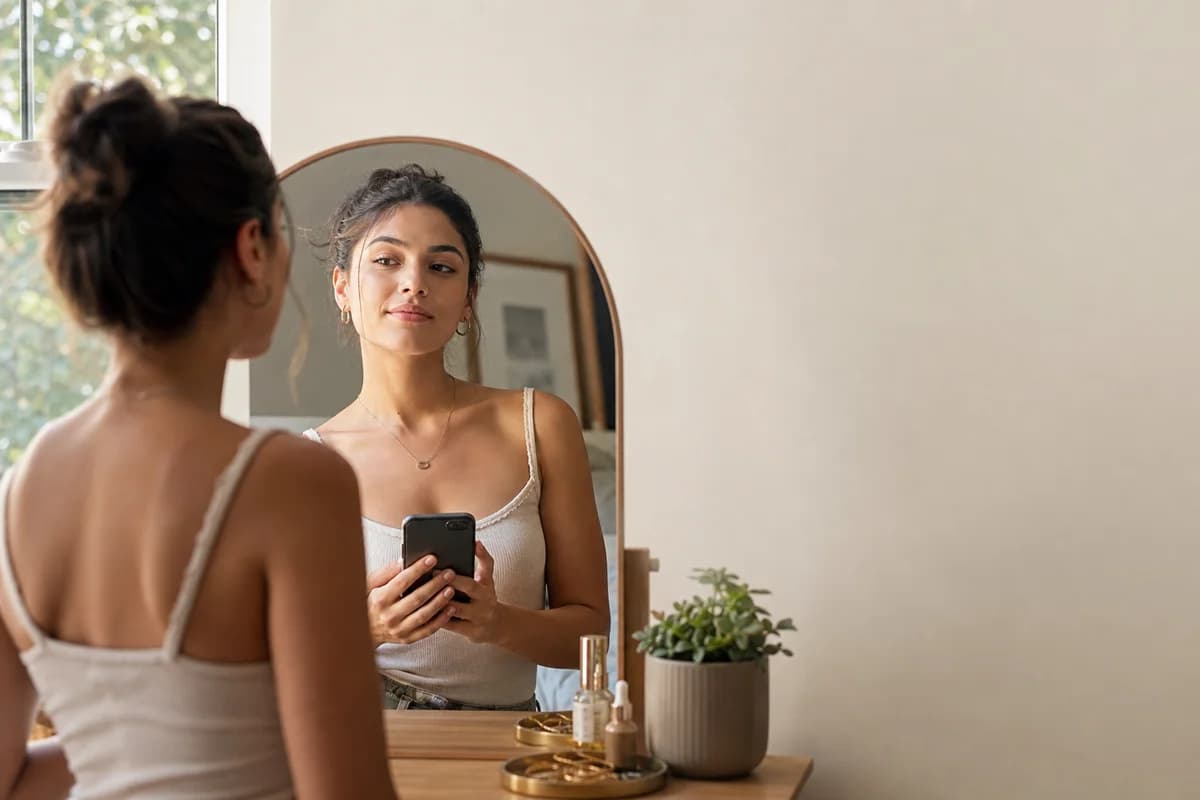
"How beautiful am I?" is a common question, but it is not a simple one. A single score can feel direct, yet beauty is affected by the face itself, grooming, hair, style, expression, light, camera distance, and the context where people see you.
That is why the better question is not only "am I beautiful?" It is: what is already working, what is getting in the way, and what would make the biggest visible difference first?
If you want that applied to your own photo, start a private beauty report. If you want the general framework first, use the sections below.
Beauty is read as a whole impression
People rarely judge one feature in isolation. They read the whole impression:
- face shape and facial balance
- hair shape around the face
- skin finish and visible irritation
- brows, facial hair, and grooming edges
- color contrast near the face
- expression and posture
- photo quality
This is why two people with similar features can read very differently. One has a haircut that supports the face, clear lighting, and intentional grooming. The other has the same raw features, but the details are fighting the face.
Start with what photos exaggerate
Before deciding how beautiful you are, make sure the photo is not lying to you. Selfies taken too close can change the way facial shape appears. Lighting can make skin look smoother, harsher, duller, shinier, younger, or more tired.
For a fairer read:
- use soft front-facing window light
- keep the camera around eye height
- step back slightly and avoid extreme close-ups
- use a neutral expression
- avoid heavy filters
- keep hair and grooming how you normally wear them
A good beauty analysis should separate your actual presentation from the flaws of a bad photo.
Look for strengths before flaws
Most people inspect their face by hunting for what is wrong. That is a poor way to improve because it ignores what should stay.
Look first for strengths:
- strong eyes or brows
- clear face shape
- good hair density or texture
- warm smile
- good contrast between features and skin
- strong jaw, cheek, lip, or forehead balance
- distinctive style cues
Good advice protects strengths. It should not push everyone toward the same face.
Then rank the visible improvements
The useful part is ranking. Ask:
- What is the easiest detail to improve?
- What affects the face frame most?
- What changes photos most?
- What costs little and can be tested quickly?
For many people, the first win is not dramatic. It is a cleaner haircut shape, better beard line, calmer skin routine, less shine in photos, softer light, or clothes that frame the neck better.
A beauty score should not be your identity
A score can be interesting, but it should not become a verdict. The healthier use of a score is directional: where are you strong, where are you weaker, and what changes are likely to matter?
Avoid any tool or advice that makes extreme claims, diagnoses skin conditions, pushes surgery, or treats beauty as human worth. A good report should be private, practical, and specific.
The useful takeaway
If you are asking "how beautiful am I?", do not stop at the number. Look for the reason behind the impression.
The most useful answer sounds more like this: these are your strongest visual signals, this is what your photo is exaggerating, and these are the few changes most likely to improve your grooming, style, and photo presence.
For a personal version, get your My Beauty Report. It turns one clear selfie into a private beauty analysis with strengths, score breakdown, and ranked next steps.