
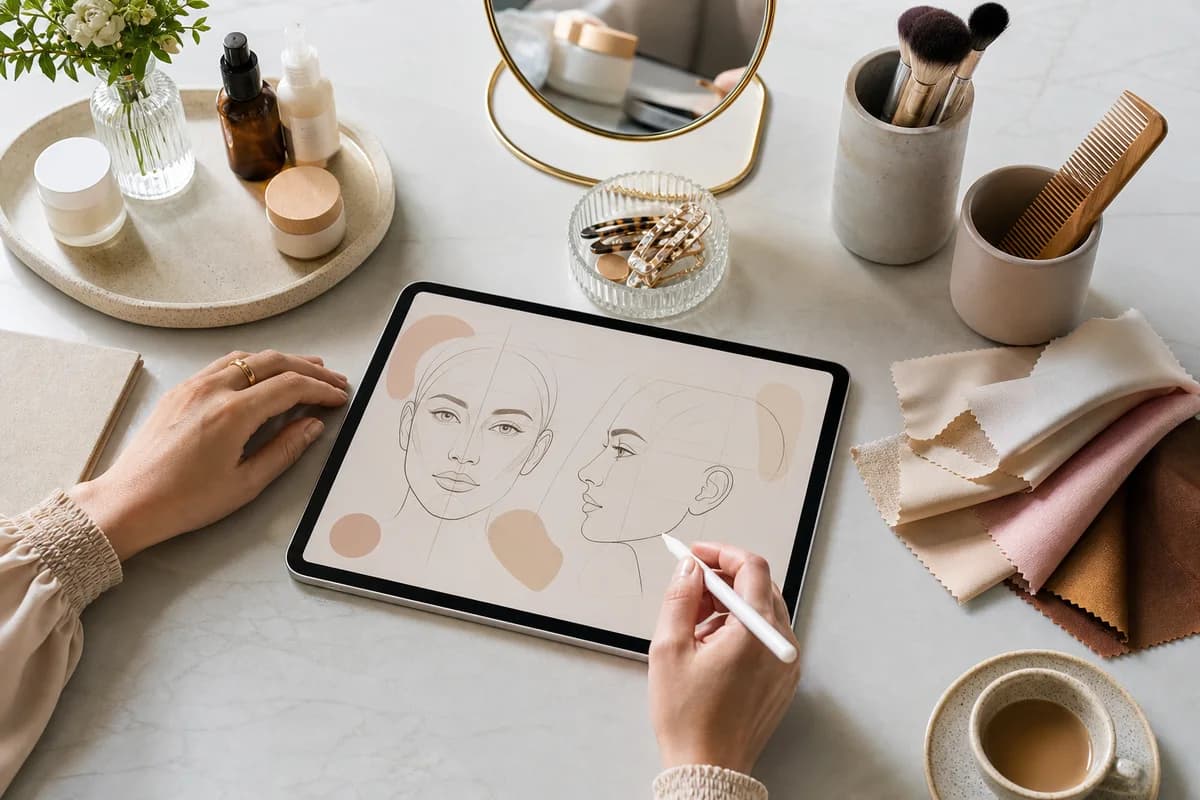
To determine beauty in a useful way, you need more than a mirror and a harsh opinion. Beauty is partly facial structure, partly presentation, and partly context. The same person can look sharper, softer, more tired, more confident, or more balanced depending on hair, grooming, light, clothing, and camera setup.
The goal is not to prove that someone is perfect. The goal is to understand what creates a stronger impression.
Separate structure from styling
A practical beauty analysis looks at two layers.
The first layer is structure:
- face shape
- feature spacing
- symmetry and balance
- jaw, cheek, forehead, nose, eye, and mouth proportions
- visible facial contrast
The second layer is styling:
- haircut and hair volume
- brows and facial hair
- skin finish
- glasses and accessories
- neckline and clothing color
- posture and expression
- photo light and angle
This distinction matters because you can change the second layer quickly. Most real-world improvements come from that layer.
Use facial balance, not perfection
Facial balance is not about every measurement being identical. Small asymmetries are normal. The better question is whether the face reads coherently as a whole.
Look at:
- whether the haircut adds helpful shape or unwanted width
- whether brows support the eyes
- whether facial hair sharpens or hides the jaw
- whether clothing crowds the neck
- whether colors near the face make the skin look healthier or duller
- whether photo light creates harsh shadows
This makes beauty analysis more practical and less obsessive.
Check skin appearance carefully
Skin appearance changes the overall read of the face. Dryness, shine, irritation, flaking, and uneven texture can distract from features that are otherwise strong.
For non-medical appearance basics, dermatology guidance usually starts with gentle cleansing, moisturizer, and sun protection. If something is painful, severe, changing, bleeding, or persistent, that is not a beauty-content problem. It belongs with a healthcare professional.
Compare photos in similar conditions
Do not judge yourself from one random selfie. Take a small set of photos in similar conditions:
- front-facing window light
- camera around eye height
- neutral expression
- no heavy filter
- simple top with a clean neckline
- hair worn normally
Then compare what changes when you adjust only one thing: hair, collar, light direction, facial hair edge, or camera distance.
Rank changes by leverage
Determining beauty becomes useful when it creates priorities.
High-leverage improvements often include:
- a haircut that suits face shape
- a cleaner brow or beard boundary
- better photo lighting
- less shine or dryness in photos
- colors that support skin tone
- a stronger profile photo crop
Low-leverage improvements are the things you keep worrying about that nobody else reads strongly.
The useful takeaway
You determine beauty best by reading the whole impression, not by isolating flaws. Structure matters, but styling, grooming, and photo setup often decide how strong that structure looks.
If you want a private analysis that ranks these factors for your own selfie, start My Beauty Report. It is built to turn "how do I look?" into clear next steps.