
A pimple always seems to appear at the worst possible time. The temptation is to attack it: scrub harder, dry it out, pop it, layer three products, and hope for the best.
That is usually how one small spot becomes redness, irritation, peeling, or a mark that lasts longer than the pimple would have.
This guide is general appearance and skincare education, not medical advice. If your acne is painful, deep, scarring, widespread, or not improving, talk to a dermatologist.
Do not pop it
The American Academy of Dermatology warns that squeezing pimples can push material deeper into the skin and increase the risk of inflammation, infection, pain, and scarring.
Better move:
- leave it alone
- keep hands off your face
- use a targeted acne product if your skin tolerates it
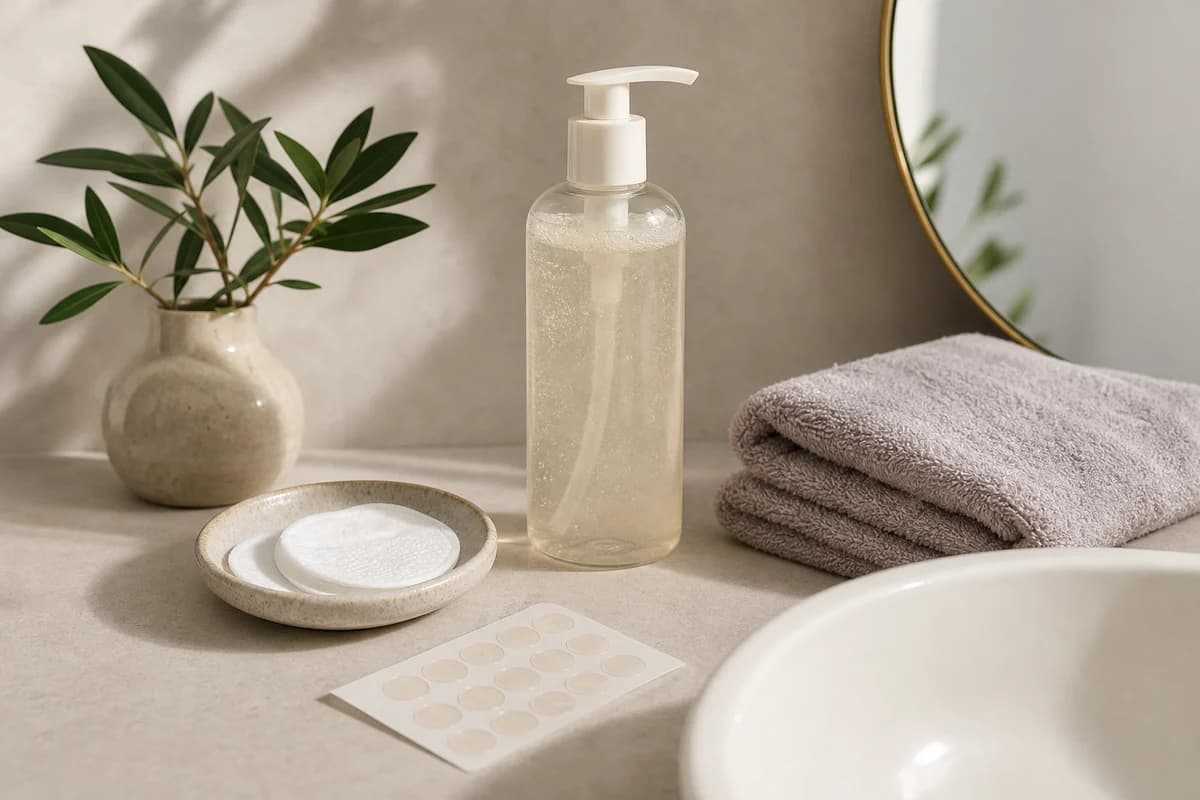
- cover it with a hydrocolloid-style patch if that stops picking
- use makeup carefully if needed, choosing noncomedogenic products
The best emergency pimple plan is often restraint.
Wash gently, not aggressively
Too much washing and scrubbing can irritate acne-prone skin. Mayo Clinic guidance recommends washing acne-prone skin twice daily with hands, a mild cleanser, and warm water.
Do this:
- cleanse gently morning and night
- wash after sweating
- use fingertips, not a rough scrub
- pat dry
- apply moisturizer if your skin feels dry
Do not try to “scrub out” acne.
Use acne ingredients slowly
Common over-the-counter acne ingredients include benzoyl peroxide, adapalene, salicylic acid, azelaic acid, and alpha hydroxy acids. Mayo Clinic notes that benzoyl peroxide helps remove excess oil and dead skin cells and that lower-strength products can be as effective as stronger ones with less irritation risk.
Practical approach:
- start with one active product
- use a lower strength first
- give it time
- moisturize
- stop if irritation is intense or persistent
More products do not always mean faster results.
Moisturizer can help acne-prone skin
Many acne treatments dry the skin. AAD notes that moisturizer can help skin tolerate treatments such as benzoyl peroxide, salicylic acid, and adapalene.
Look for:
- noncomedogenic
- oil-free if you are very oily
- fragrance-free if sensitive
- lightweight texture
Dry, irritated skin can look worse in person and on camera.
When to get help
See a dermatologist if you have:
- deep painful bumps
- cysts or nodules
- acne that scars
- acne that affects confidence or daily life
- no improvement after consistent over-the-counter care
- irritation from products that will not settle
Mayo Clinic notes that prescription treatments can help control acne and avoid scarring.
The useful takeaway
For one pimple:
- Do not pop it.
- Cleanse gently.
- Use one targeted product if appropriate.
- Moisturize.
- Protect skin from sun.
- Get help if acne is painful, deep, or scarring.
For overall presentation, the pimple is rarely the whole story. Skin finish, grooming, hair, and photo setup all matter. Start your beauty report if you want a broader grooming and photo-ready plan.