
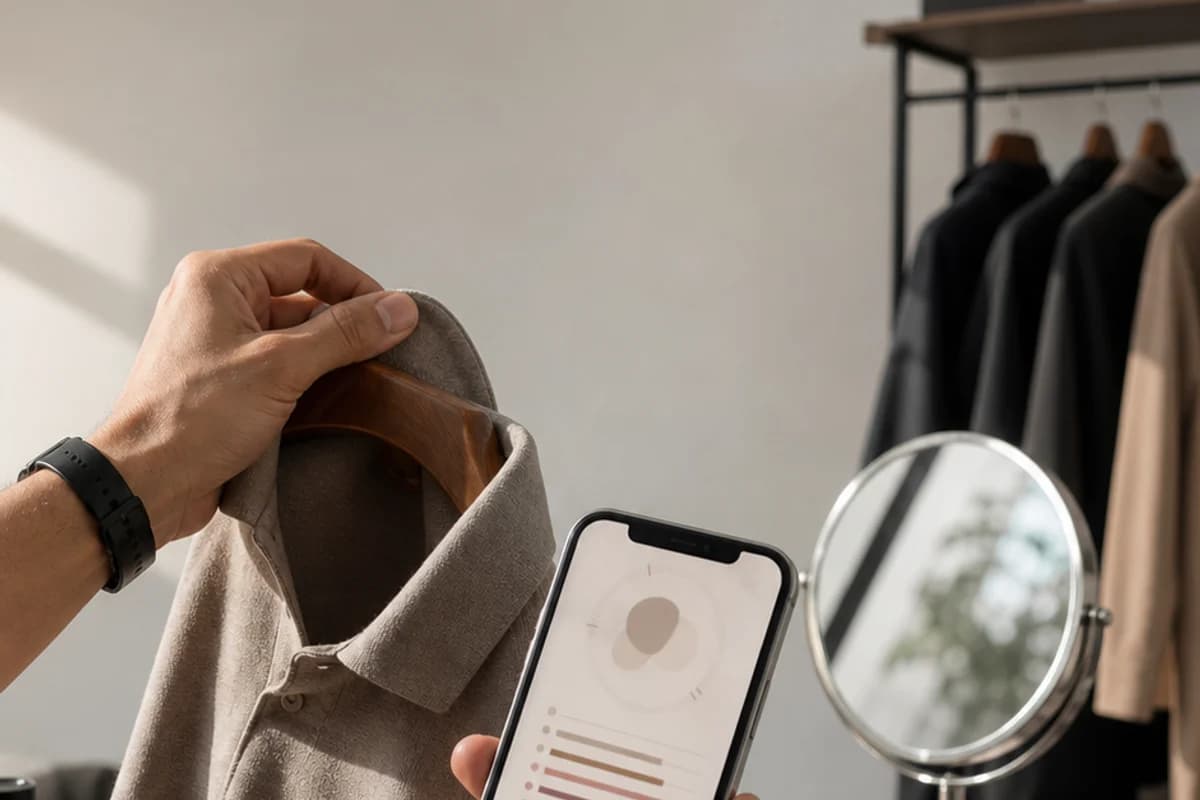
When people want to look better, they usually start too wide. New haircut, new skincare, new clothes, new photos, new everything. That gets expensive and confusing fast.
A better question is: what would change the most with the least effort? If you want that answer for your own face, start your personal beauty report. If you want the general framework first, use this order.
First: fix the things that make you look less intentional
Before optimizing style, remove the obvious friction:
- hair that has no current shape
- facial hair edges that look accidental
- dry lips or flaky skin
- shiny skin in photos
- collars that collapse or crowd the neck
- glasses glare
- old profile photos with bad light
These details matter because they are easy for other people to read. They do not require a new identity. They just make the current version of you look more deliberate.
Hair often changes the frame fastest
Hair sits directly around the face, so it affects balance immediately. The useful question is not “what haircut is trendy?” It is “what frame helps my face?”
Look at:
- whether the sides add too much width
- whether the top has helpful height or messy bulk
- whether the hairline is being supported or exposed awkwardly
- whether facial hair and haircut are working together
If you are booking a haircut, bring more than inspiration photos. Bring a clear idea of what you want the cut to solve: soften width, add structure, clean the silhouette, or make photos look more polished.
Skin appearance is usually a basic routine problem
For non-medical skin appearance, the boring basics do a lot: gentle cleansing, moisturizer, sunscreen, and not irritating your skin with harsh scrubbing. The American Academy of Dermatology recommends broad-spectrum SPF 30 or higher, and Mayo Clinic guidance for acne-prone skin emphasizes gentle washing and noncomedogenic products.
That does not mean skincare is unimportant. It means the first win is consistency.
Try asking:
- Does my skin look dry, oily, dull, or irritated in photos?
- Am I using too many products too aggressively?
- Do I need a dermatologist instead of another guess?
- Does my routine make me look calmer under normal light?
A beauty report should never replace medical care. It can help you notice appearance patterns and prioritize grooming choices.
Grooming beats product overload
Small grooming upgrades often outperform expensive products:
- trim brows without over-shaping them
- clean up beard and neck lines
- keep nails and hands photo-ready if they appear in content
- remove lint before photos
- use lip balm before camera-heavy days
- choose a simple fragrance-free moisturizer if your skin tolerates it
This is the “visible maintenance” layer. People may not notice the individual steps, but they notice the result.
Style should support your face, not steal the scene
Clothing affects how your face is framed. Neckline, color contrast, fabric texture, and fit can make you look sharper or more tired.
Start with:
- cleaner necklines
- colors that do not wash out your skin
- jackets or overshirts that add structure
- avoiding busy patterns near the face in profile photos
- making sure black, white, and gray are actually flattering on you
Style does not need to be loud. It needs to make your face easier to read.
The easiest decision rule
Improve in this order:
- Anything that looks accidental.
- Anything that frames the face.
- Anything that changes photo quality.
- Anything that supports your personal style.
That keeps you out of random makeover mode. Get your private report if you want the same logic applied to one clear selfie, with the next priorities ranked for you.